Brasil is the worlds second largest black population, with less than half of its population being white, they control all the high paying jobs and positions of power. Legislators want to pass qoutas in the universities, in the media and in the government. Afro-brasilian's earn to half as much money as white brasilians, and Afro-brasilians don't stand for 5 % of the government, even though they are almost 2 thirds of the population. They want to implement these qoutas because they don't believe brasil is currently equal with its rights concerning whites and blacks.
I think the way race is looked at in brasil is culturally unique to the world and a place where racial mixture is comon and not segregated at all. I believe that these qoutas could hash some sort of tensions between the white and black races, that seem to be living in harmony.
But the education and wedge levels aren't equal, like in most places around the world. The poor are darker and the white are smarter. But Brasil will have to develope a way to keep their culture and still try to make the country as equal for all colors, because racial tolerance and equality is the example they want us to think of Brazil. The economy must work to provide jobs of high wages for colored people, if they are educated. A lot of global companies work around Affirmative Action and qoutas by investing in workers who opt for units of human capital. This enables them to avoid having to pay labor unions and invest int eh infustructure of brasil and its people.
Monday, February 28, 2011

Tuesday, February 15, 2011
brasil & portugal
Brazil gained its independance from portugal. Becuase the french had invaded Portugal, forcing the royal family to flee to their Brazilian colonies. Once these nobles and portugese royality established themselves in Brazil they started developing the educational system and its cultures, leading to the independence in 1822.
In 1860 Brazil had only 140 miles of railroad; by 1865 that number had increased to 4,330 miles of railroad. Because of the effect on the infustructure, I must say that coffee was a major export item, and had a bigger impact on the economy than sugar or gold.
Brazil was already free from colonialism from the Portugese because the Dutch who controled the European sugar market, eventually took over the Portugese monopoly in South America. Because Portugal had to do business with the Dutch to bring their sugar into europe, the Dutch had alot of knowlegde of how things worked in Brazil. In 1580 Portugal was incorporated into Spain until 1640, a country that the Dutch were at war with. The Dutch controled all the portugese sugar production in the north east of brazil during this time, and eventually took there newely aquired know-how for manufacturing sugar to the Caribbean. That was the begining of the end for the Portugese. They were forced to try and explore Brazil's territories for precious minerals like gold.
In 1860 Brazil had only 140 miles of railroad; by 1865 that number had increased to 4,330 miles of railroad. Because of the effect on the infustructure, I must say that coffee was a major export item, and had a bigger impact on the economy than sugar or gold.
Brazil was already free from colonialism from the Portugese because the Dutch who controled the European sugar market, eventually took over the Portugese monopoly in South America. Because Portugal had to do business with the Dutch to bring their sugar into europe, the Dutch had alot of knowlegde of how things worked in Brazil. In 1580 Portugal was incorporated into Spain until 1640, a country that the Dutch were at war with. The Dutch controled all the portugese sugar production in the north east of brazil during this time, and eventually took there newely aquired know-how for manufacturing sugar to the Caribbean. That was the begining of the end for the Portugese. They were forced to try and explore Brazil's territories for precious minerals like gold.
Friday, February 11, 2011
The Man of the Hole'
The ‘Last of his Tribe’
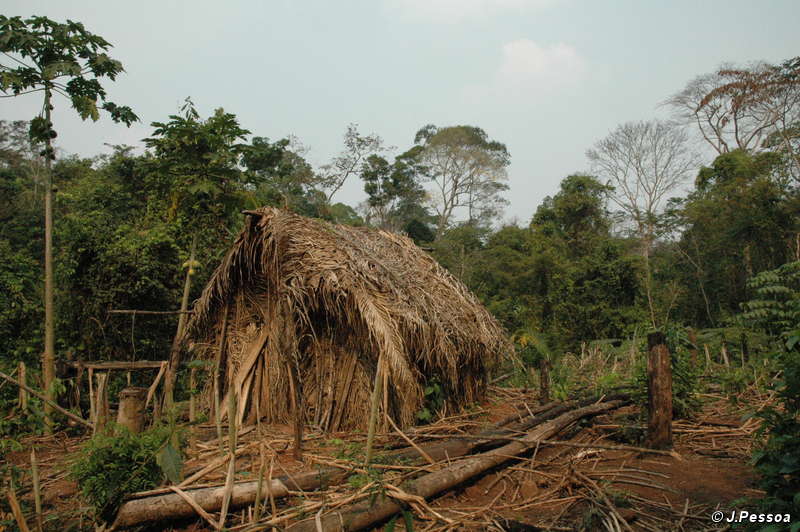 |
| The 'Man of the Hole's' house and garden where he grows manioc and other vegetables. © J.Pessoa |
It is believed that this lone man is the last survivor of his people, who were probably massacred by cattle ranchers occupying the region of Tanaru in Rondônia state.
He lives on his own and is constantly on the run.
We do not know his name, what tribe he belongs to or what language he speaks.
He is sometimes known only as ‘the Man of the Hole’ because of the big holes he digs either to trap animals or to hide in.
He totally rejects any type of contact.
The National Indian foundation has set aside a small patch of rainforest for his protection. This area is entirely surrounded by cattle ranchers.
In late 2009, the man was viciously targeted by gunmen. In the past, many ranchers have used gunmen to kill uncontacted Indians in Rondônia.
WATCH THESE VIDEOS
http://www.youtube.com/watch?v=ngVW6sRDc1k&feature=fvwrel
http://www.youtube.com/watch?v=ffh9QT8I6fQ&feature=player_embedded
My personal opinion on the whole uncontacted Indians is that they are people too. Just people that don't want any contact.hahaaha
They must have fled from someone or something that was effecting them all in negative ways. Although they may have fled many years ago, when conquisators were making huge land graps, bringing in and giving diease to their families and tribes. Or more recently when loggers have hired gunmen to kill off inhabitants of the forest to make a profit. I don't blame this guy for being like that with people that try and come befriend him. It may not be the same people that have screwed him over before, but they come in numbers with cameras and guns. They look they same to him. For all he knows these people will eventually cause him harm.
Monday, February 7, 2011
Isolated Indians living in Western Brazil's Amazon who are in danger from loggers
Brazil is the biggest country in South America. It also has one of the largest indigenous Indian populations in the world. When I say indigenous tribes I am describing a people who have stayed away from conforming to our materialistic world. Descendants of the original tribes that fled deep into the forest to avoid the Portuguese oppressors. Some of these tribes have stayed uncontacted and choose to stay like that, because they live deep in the Amazon away from any infustructure and people. How they have survived threw the years of European exploitation, slavery, and the “rubber boom” blows my mind. It’s crazy to think that at the time of the arrival of Portugal the tribes were mostly nomadic people based off hunting, fishing, and gathering. And to go untraced and unaccounted for gives a lot of credit to the sustainability and presence of mind to be one with nature. For me to know people are living in and off nature without leaving a footprint is inspiring. There are plenty of activist groups who spread the word about how indigenous groups are in danger; their lives should be protected from illegal loggers who want to cut their homes away, our planets rainforest, for greed and money. The problem with the loggers making money isn’t anger me, I want everyone to eat and be able to provide for they families but there has to be importance on the earths geography, and the embodied energy that comes from cutting down acres and acres of trees that have been growing for thousands of years. This is a recent picture from a helicopter of some uncontacted family from the Amazon near the border of Peru.

Subscribe to:
Posts (Atom)